The textile industry faces mounting pressure to adopt sustainable practices, particularly in packaging solutions that protect synthetic fabrics while minimizing environmental impact. 🌱

Understanding the Environmental Challenge of Synthetic Textile Packaging
Synthetic textiles dominate today’s fashion and industrial fabric markets, accounting for approximately 60% of global fiber production. Yet the packaging used to protect these materials during storage and transportation often contradicts sustainability goals. Traditional plastic wraps, non-recyclable films, and chemical-laden protective materials create significant waste streams that persist in landfills for centuries.
The irony isn’t lost on industry leaders: textiles manufactured with increasing efficiency and innovation are wrapped in packaging that undermines environmental progress. This disconnect has sparked a revolution in conservation-grade packaging designed specifically for synthetic materials like polyester, nylon, acrylic, and spandex blends.
What Defines Conservation-Grade Packaging? 🔍
Conservation-grade packaging represents a specialized category of protective materials developed originally for museums, archives, and cultural institutions. These solutions prioritize long-term preservation without chemical degradation or environmental contamination. When adapted for synthetic textiles, conservation-grade packaging offers several distinct characteristics:
- Chemical stability that prevents reactions with synthetic fibers
- Breathability that manages moisture without promoting mildew
- Physical protection against dust, light, and mechanical damage
- Biodegradability or recyclability at end-of-life
- Neutral pH levels that won’t degrade over time
These materials undergo rigorous testing to ensure they meet archival standards typically reserved for preserving historical textiles, paintings, and documents. The adaptation to commercial synthetic textile packaging represents a significant advancement in sustainable business practices.
Biodegradable Polymers: The New Frontier in Textile Protection
Recent innovations in biopolymer technology have produced packaging materials that match conventional plastics in protective qualities while offering complete biodegradability. Polylactic acid (PLA), derived from fermented plant starches, has emerged as a leading material for synthetic textile packaging.
PLA films provide excellent barrier properties against moisture and contaminants while maintaining transparency for product visibility. Unlike petroleum-based plastics, PLA breaks down into water and carbon dioxide under industrial composting conditions within 90 to 180 days. This decomposition timeline represents a dramatic improvement over conventional plastics that persist for 500 years or more.
Polyhydroxyalkanoates (PHAs) offer even more impressive credentials. These biopolymers, produced through bacterial fermentation, biodegrade in marine environments and soil without specialized facilities. For textile companies committed to circular economy principles, PHA packaging eliminates concerns about end-of-life disposal challenges.
Paper-Based Solutions With Modern Protection Technology 📦
Traditional paper packaging has evolved significantly through specialized treatments that enhance protective capabilities without sacrificing sustainability. Modern conservation-grade paper solutions incorporate several technological advances:
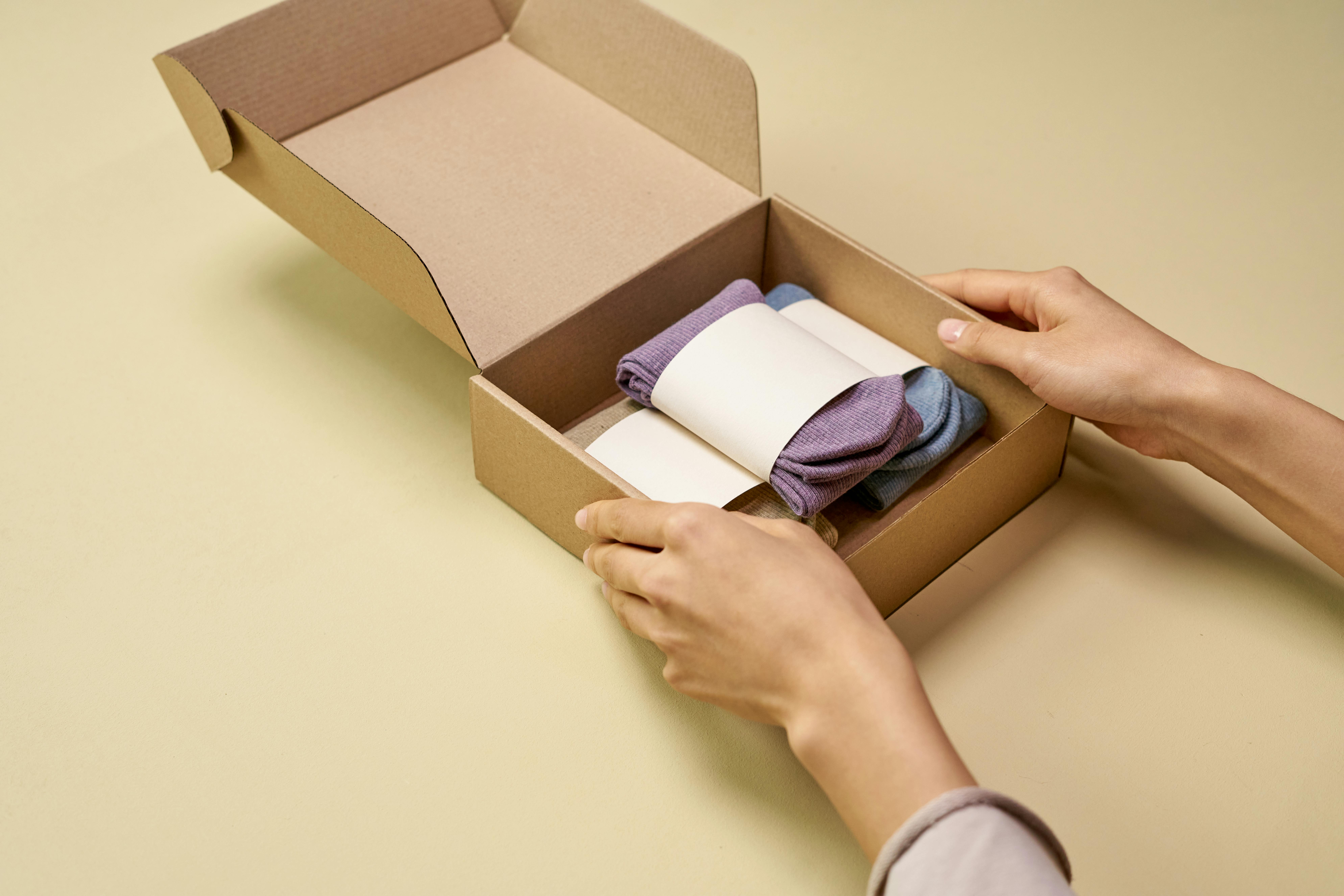
Acid-free papers manufactured from cotton linters or alpha cellulose provide archival stability that prevents yellowing and brittleness. These papers maintain integrity for decades, offering genuine long-term protection for synthetic textiles in storage or transit.
Water-resistant coatings derived from natural waxes, plant-based resins, or chitosan create moisture barriers without plastic lamination. These treatments maintain paper’s recyclability and compostability while protecting textiles from humidity damage during shipping.
Reinforced kraft papers with increased tensile strength offer durability comparable to plastic mailers at a fraction of the environmental cost. These papers incorporate longer fibers or multi-layer construction that resists tearing during handling.
The Science Behind Textile-Packaging Compatibility
Synthetic textiles present unique preservation challenges that conservation-grade packaging must address. Understanding these interactions helps manufacturers select appropriate sustainable solutions.
Synthetic fibers, particularly polyester and nylon, can experience hydrolysis when exposed to moisture over extended periods. This chemical degradation breaks down polymer chains, weakening fabric structure. Conservation-grade packaging must control moisture levels without creating completely sealed environments that trap humidity.
Micro-perforated biodegradable films allow controlled air exchange that manages humidity while preventing dust intrusion. This balance proves critical for synthetic textiles stored in warehouses or retail environments with fluctuating conditions.
Light exposure poses another significant threat to synthetic fabrics, causing photodegradation that fades colors and weakens fibers. Opaque or UV-filtering packaging materials protect against this damage without requiring conventional plastic barriers. Plant-based films incorporating natural UV absorbers like lignin derivatives offer effective light protection with complete biodegradability.
Implementing Sustainable Packaging Systems in Textile Operations 🏭
Transitioning to conservation-grade packaging requires strategic planning beyond simply substituting materials. Successful implementation involves several interconnected considerations:
Supply Chain Integration
Sustainable packaging suppliers may differ from traditional vendors, requiring new relationships and logistics arrangements. Many conservation-grade materials come from specialized manufacturers focused on archival and preservation markets. Textile companies must identify suppliers capable of scaling production to meet commercial volumes while maintaining quality standards.
Lead times for sustainable materials may initially exceed conventional options as production capacity expands to meet growing demand. Building inventory buffers and planning seasonal needs in advance prevents disruptions during the transition period.
Equipment and Process Modifications
Some conservation-grade materials require adjusted handling compared to conventional plastics. Biodegradable films may have different sealing temperatures or mechanical properties that necessitate equipment recalibration.
Paper-based packaging often integrates with existing folding and sealing equipment with minimal modification. However, water-resistant coatings may require specific adhesives or closure mechanisms that differ from traditional tape and heat-sealing methods.
Cost Considerations and ROI Analysis
Premium positioning often accompanies sustainable packaging, with materials costs ranging from 15% to 40% higher than conventional alternatives. However, comprehensive financial analysis reveals multiple offsetting factors:
| Cost Factor | Traditional Packaging | Conservation-Grade Packaging |
|---|---|---|
| Material Unit Cost | Lower baseline | 15-40% premium |
| Waste Disposal Fees | Increasing annually | Minimal or eliminated |
| Brand Value Impact | Neutral or negative | Positive differentiation |
| Regulatory Compliance | Changing requirements | Future-proofed |
| Customer Retention | Standard | Enhanced loyalty |
Many companies report that sustainable packaging investments pay dividends through enhanced brand reputation, improved customer satisfaction scores, and reduced regulatory risk as environmental legislation tightens globally.
Consumer Perception and Market Differentiation 🌟
Market research consistently demonstrates that packaging sustainability influences purchasing decisions, particularly among younger consumers. A 2023 study found that 73% of millennials and Gen Z consumers actively seek brands using eco-friendly packaging, with 45% willing to pay premium prices for sustainable options.
Conservation-grade packaging provides tangible evidence of environmental commitment that resonates in marketing communications. Unlike abstract sustainability claims, packaging represents a visible, tactile demonstration of values that consumers experience directly.
Social media amplification further magnifies packaging impact. Unboxing videos and product photography routinely highlight packaging aesthetics and sustainability features. Brands using innovative eco-friendly packaging benefit from organic content creation as environmentally conscious consumers share their purchases.
Regulatory Landscape and Compliance Advantages
Environmental regulations governing packaging waste continue tightening across major markets. The European Union’s Packaging and Packaging Waste Directive mandates increasingly strict recycling targets and single-use plastic reductions. Similar legislation is advancing in California, Canada, and Asian markets.
Companies adopting conservation-grade packaging position themselves ahead of regulatory curves, avoiding costly emergency transitions when new requirements take effect. This proactive approach eliminates compliance risks while providing competitive advantages as regulations constrain less-prepared competitors.
Extended Producer Responsibility (EPR) schemes increasingly hold manufacturers accountable for packaging end-of-life management. Biodegradable and compostable materials significantly reduce EPR fees compared to conventional plastics, creating ongoing cost savings that offset initial material premiums.
Case Studies: Leading Brands Pioneering Sustainable Textile Packaging
Several major textile brands have implemented conservation-grade packaging with measurable results that demonstrate both environmental and business benefits.
A European athletic wear manufacturer transitioned to PLA-based garment bags for their polyester and nylon products in 2021. The company reported 67% reduction in packaging carbon footprint alongside 12% improvement in customer satisfaction scores specifically attributed to sustainable packaging. Post-consumer feedback highlighted that customers appreciated the brand’s environmental commitment without sacrificing product protection.
A luxury textile retailer specializing in synthetic performance fabrics adopted acid-free paper packaging with plant-based moisture barriers. This transition eliminated 340 tons of plastic packaging annually while enhancing brand positioning in premium markets where sustainability carries significant cachet. The company documented 8% sales growth in the quarter following packaging launch, with marketing analytics attributing substantial influence to the sustainability initiative.
Technical Specifications for Optimal Synthetic Textile Protection 📋
Selecting appropriate conservation-grade packaging requires matching material properties to specific textile characteristics and storage conditions:
For polyester fabrics, packaging should maintain relative humidity between 40-50% to prevent hydrolytic degradation. Micro-perforated biodegradable films with controlled moisture vapor transmission rates between 300-500 g/m²/24hr provide optimal conditions.
Nylon textiles benefit from UV-protective packaging that blocks wavelengths below 400nm while allowing visual inspection. Plant-based films incorporating lignin or natural colorants achieve 95%+ UV blocking without petroleum-derived additives.
Acrylic and spandex blends require gentle handling to prevent creasing and stretching during packaging. Soft, non-abrasive conservation papers with minimal surface texture protect these delicate synthetics without mechanical damage.
Future Innovations in Eco-Friendly Textile Packaging 🚀
Research laboratories and material science companies continue developing next-generation solutions that will further advance sustainable textile packaging:
Mushroom-based packaging grown from mycelium offers completely compostable protection with impressive cushioning properties. These materials could replace foam packaging elements while providing home-compostable disposal options.
Seaweed-derived films present another promising avenue, utilizing abundant marine resources to create biodegradable barriers with excellent moisture resistance. These materials decompose rapidly in both marine and terrestrial environments, addressing ocean plastic concerns.
Smart packaging incorporating biodegradable sensors could monitor storage conditions and alert handlers to temperature or humidity excursions that might damage synthetic textiles. These innovations would combine conservation-grade protection with real-time quality assurance.
Practical Implementation Roadmap for Textile Companies
Organizations seeking to transition to conservation-grade packaging can follow a structured approach that minimizes disruption while maximizing benefits:
Phase 1: Assessment and Planning (Months 1-2) – Audit current packaging across all product lines, identifying volumes, costs, and environmental impacts. Research conservation-grade alternatives suitable for specific synthetic textile types. Engage suppliers and request samples for testing.
Phase 2: Pilot Testing (Months 3-4) – Implement sustainable packaging for limited product lines or regional markets. Monitor performance metrics including damage rates, customer feedback, and operational efficiency. Gather data to refine material selections and processes.
Phase 3: Scaled Implementation (Months 5-8) – Expand successful pilot programs across broader product portfolios. Train staff on proper handling of new materials. Update marketing communications to highlight sustainability initiatives.
Phase 4: Optimization and Innovation (Ongoing) – Continuously evaluate emerging materials and technologies. Establish feedback loops with customers and operations teams. Share learnings across industry networks to advance collective progress.
Creating Lasting Environmental Impact Through Thoughtful Packaging Choices 💚
The transition to conservation-grade packaging for synthetic textiles represents more than operational change—it embodies a fundamental shift in how the industry approaches environmental responsibility. By protecting products with materials that also protect the planet, textile companies align business success with ecological stewardship.
Every biodegradable bag, every acid-free paper wrapper, every plant-based protective film contributes to reducing the billions of tons of packaging waste generated annually. While individual changes may seem modest, collective industry adoption creates transformative environmental benefits.
The synthetic textile sector stands at a crossroads where innovation meets responsibility. Conservation-grade packaging offers a proven pathway forward—one that protects valuable products, satisfies environmentally conscious consumers, ensures regulatory compliance, and demonstrates genuine commitment to sustainability. Companies embracing these solutions today position themselves as tomorrow’s industry leaders, proving that environmental protection and business success are not competing priorities but complementary objectives achieved through thoughtful innovation.
As material science continues advancing and consumer expectations evolve, conservation-grade packaging will transition from competitive advantage to industry standard. Forward-thinking textile companies recognizing this trajectory today will reap rewards in brand equity, customer loyalty, and operational efficiency while contributing meaningfully to global sustainability goals. The future of textile packaging is not just sustainable—it’s conservation-grade.